
Closed
coffeeshop
chain experiment
From legal basis to roll-out: everything you need to know about the closed coffeeshop chain experiment.
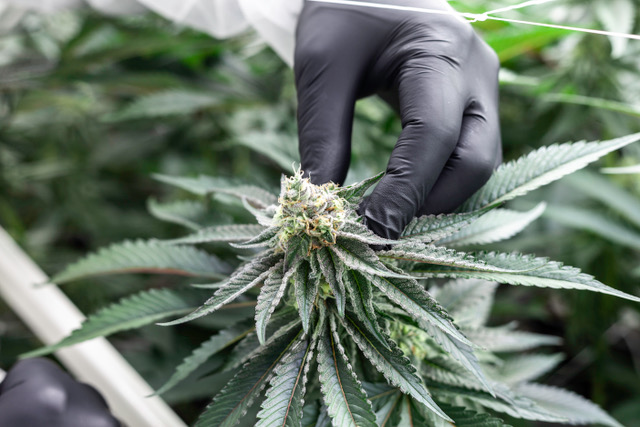
The controlled coffeeshop chain experiment — often called the weed experiment — tests whether a legal, controlled chain from cultivation to sale works. In ten participating municipalities, all coffeeshops sell only cannabis from designated growers, under supervision and with track-and-trace.
Our position: The experiment must be assessed on its workability for entrepreneurs; falling back to the old tolerance policy after the experimental phase is not a workable prospect for participating coffeeshops.
Jump to
Basics & background
What the experiment is, how it came about and its phases.
Who takes part
The ten participating municipalities and the appointed growers.
Rules & supervision
Product rules, track & trace, enforcement bodies and the scientific evaluation.
For operators
What changes in practice for the coffeeshop — and where it pinches.
News & our position
State of play 2026, our position and the official documents.
Other topics
Additional pages in this dossier.
The closed coffeeshop chain experiment is the first serious attempt to regulate the back door of the Dutch tolerance policy. In ten participating municipalities, coffeeshops sell only government-designated, regulated cannabis — with track & trace, product standards and quality requirements.
This dossier sets out the legal basis, timeline and phases, describes who is participating (municipalities and growers) and which rules apply. It also names the issues emerging in practice: range, scalability, price and the tension with the tolerated part of the market.
Timeline & phases
Preparation phase
Growers, coffeeshop operators, regulators and municipalities prepare
- 2017Coalition agreement: research into a closed coffeeshop chainThe government announces uniform experiments with tolerated cannabis cultivation for coffeeshops in six to ten municipalities.
- 2018Knottnerus committee report and bill submittedThe advisory committee delivers the experiment's design; the bill is submitted to parliament.
- 2019Bill adopted by the House of RepresentativesParliament adopts the Closed Coffeeshop Chain Experiment Act; the Senate follows.
- Augustus 2019Participating municipalities nominatedTen municipalities are nominated, including Breda, Tilburg, Almere, Arnhem, Nijmegen, Groningen, Heerlen, Maastricht, Zaanstad and Voorne aan Zee.
- 1 juli 2020Preparation phase of the experiment startsGrowers, coffeeshop operators, regulators and municipalities start preparing the closed chain.
- 2021Growers selected and designated / Bibob screeningTen growers are designated and go through the Bibob integrity screening.
Start-up phase
Regulated cannabis goes on sale in Breda and Tilburg
- 15 december 2023Start-up phase began on 15 December 2023Coffeeshops in Breda and Tilburg may sell regulated cannabis for the first time, alongside tolerated supply.
Transition phase
Regulated cannabis on sale in all participating municipalities
- 17 juni 2024Transition phase began on 17 June 2024In every participating municipality coffeeshops may sell both tolerated and regulated cannabis.
Experimental phase
(4 years)nowOnly regulated cannabis is sold in all participating municipalities
- 7 april 2025Experimental phase began on 7 April 2025Coffeeshops in participating municipalities sell only regulated cannabis. Hashish had a temporary exemption.
- 1 september 2025End of the exemption for illegal hashish on 1 September 2025From this date hashish too may only come from the regulated chain.
- 7 augustus 2028Evaluation delivered on 7 August 2028The supervisory committee delivers its final report with findings and recommendations to the ministers.
- 7 december 2028Government position on 7 December 2028Based on the evaluation the government determines its position and informs parliament about next steps.
- 7 april 2029End of the experimental phase on 7 April 2029After four years the experimental phase ends and a six-month wind-down begins, unless decided otherwise.
Wind-down phase*
(6 months)Unless decided otherwise
Possible extension**
(max. 1.5 years)If extended by decree the experiment ends no later than 7 October 2030
- 7 oktober 2030Possible extension by decree until 7 October 2030 at the latestIf extended, the experiment runs until this date at the latest. What follows depends on political decision-making.
- ?
After that the experiment ends, unless structural legislation has entered into force
Phases and dates follow the Dutch closed coffeeshop chain experiment act. Hover a node for more detail; the ‘now’ marker updates automatically.
Until the end of the experimental phase
0% of the experimental phase elapsed since 7 April 2025
Reference date 7 April 2029 (end of the experimental phase). A six-month wind-down follows until 7 October 2029; if extended by decree, no later than 7 October 2030.
Sources
- Wet experiment gesloten coffeeshopketenAct, Decree and Regulation on the controlled coffeeshop chain experiment
- Op welke wetgeving is het experiment gebaseerd? (Rijksoverheid)Government source overview referring to the Act, Decree and Regulation
- Deelnemende gemeenten (Rijksoverheid)Current overview of the ten participating municipalities
- Voortgangsbrieven ministers van VWS en JenVParliamentary papers on the progress of the experimentNo direct source link included yet
- Onderzoeksopzet begeleidend onderzoekConsortium conducting the accompanying research into the experimentNo direct source link included yet
Cite this page: https://coffeeshopbond.nl/en/publicaties/experiment-gesloten-coffeeshopketen
Content updated: 26 August 2026. Sources and presentation updated: 27 September 2026.