
This is an English translation. The original Dutch article is authoritative.
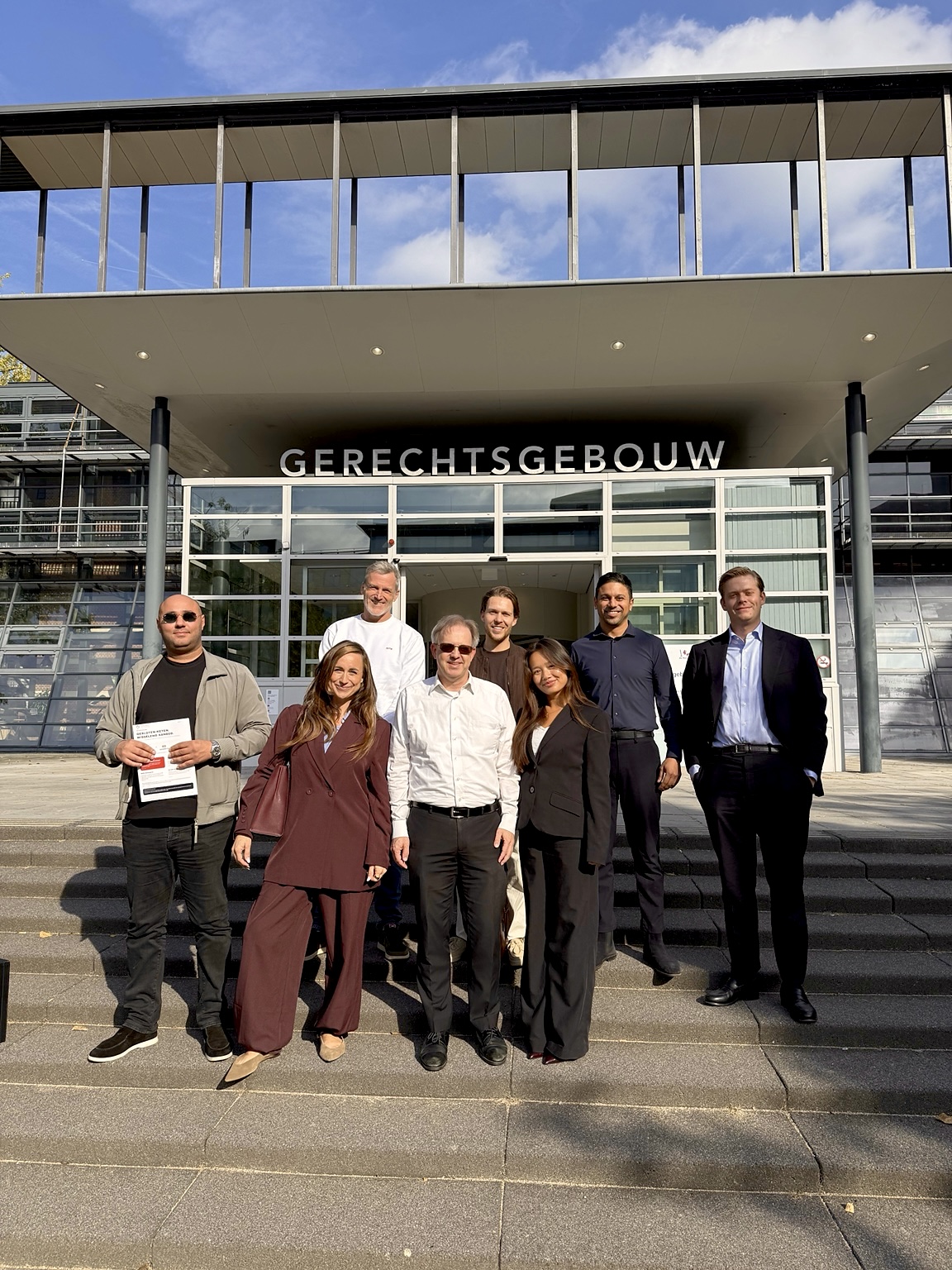
On 5 October, the Midden-Nederland district court held the second summary proceedings against Worldline. The focus was on the blocking of American payment cards at coffeeshops and the possibility that Worldline may also block other foreign payment cards in the future.
The core of Worldline's defence is the assertion that by processing international, and specifically American, payment cards, it facilitates payments that, in its view, fall outside the Dutch tolerance policy.
Worldline bases this primarily on the residency criterion. According to Worldline, coffeeshops are not permitted to sell cannabis to non-residents of the Netherlands, and in the case of a payment with a card issued by a US bank, it can be assumed in most cases that the cardholder is not a Dutch resident. Worldline therefore claims that by processing these payments, it would be cooperating in transactions that do not fall within the conditions of the tolerance policy.
Additionally, Worldline invokes US legislation and the position of US banks. During the hearing, Worldline explained that it considers payments with US cards to carry a significantly higher risk than payments with cards from other countries. According to Worldline, US cards specifically carry an increased risk of problems with banks, card companies, and other parties in the international payment chain. This higher risk is, according to Worldline, the reason for specifically blocking US cards at this time.
The rules of Visa and Mastercard also play a role in the defence. Worldline refers to provisions relating to illegal or drug-related transactions and sees these as additional support for the chosen measure. Conversely, both Visa and Mastercard themselves have indicated that there is no impediment from their schemes to process payments at Dutch coffeeshops. Mastercard has confirmed that it continues to support the acceptance of Mastercard payment products at Dutch coffeeshops. Visa has indicated that what is permitted by the government in the country where the transaction takes place is also permitted by Visa. This view was also confirmed by the Minister of Finance this summer: in his letter of 9 July, it states that both companies have indicated they currently serve the coffeeshop sector. Furthermore, Worldline has not submitted any concrete instruction from Visa or Mastercard showing that US payment cards must be blocked at Dutch coffeeshops.
Furthermore, Worldline relies on the Money Laundering and Terrorist Financing (Prevention) Act (Wwft). According to Worldline, payment service providers may not facilitate payments for illegal activities and it must be able to intervene when transactions, in its view, fall outside the tolerance policy.
Finally, Worldline invokes its general terms and conditions. These would allegedly give it the option to suspend transactions or services under certain circumstances, for example, in the event of a conflict with legislation, card company rules, or integrity risks.
Worldline emphasised that it has not terminated all services. It claims to have consciously chosen a more limited measure. According to Worldline, US cards were chosen specifically because it considers that category to be the greatest risk in the payment chain. At the same time, Worldline has consistently reserved the right in its communication to also block other foreign payment cards later.
Residency criterion central to debate
From our side, it was argued that the residency criterion has existed since 2013 and can therefore hardly be presented as a new circumstance. It was also emphasised that the Dutch coffeeshop policy is precisely characterised by tolerance, whereby the implementation and enforcement of the residency criterion differ locally.
The judge asked several questions to Worldline regarding this. When Worldline emphasised that the residency criterion is formally part of the national framework, the judge pointed to the unique system of the tolerance policy and the significance of the fact that a criterion is not enforced locally.
Furthermore, the judge indicated that he had researched for himself that the residency criterion was largely introduced at the time to combat drug tourism in border municipalities. In doing so, he noted that none of the coffeeshops that are parties to these proceedings are located in a border municipality.
This explicitly brought to the table the question of the extent to which the residency criterion in these concrete situations forms a sufficient ground for a blockade of certain foreign payment cards.
US legislation and the payment chain
Worldline's appeal to US legislation was also discussed extensively. We argued that the US rules mentioned by Worldline relate to financial services for cannabis companies and do not automatically mean that a US consumer in the Netherlands would not be allowed to make a payment at a coffeeshop.
Additionally, it was pointed out that no US bank or regulator has contacted the involved coffeeshops with objections to such transactions. Nor has it appeared that there was any concrete instruction from a US bank to block these payments.
Worldline countered that, in its view, the risk is higher specifically in the US payment chain than in other countries and that this is the reason for specifically blocking US cards.
Wwft requires individual assessment
Another important part of the proceedings concerns the Wwft. We argued that this law is based on an individual and risk-based assessment of customers.
Excluding an entire customer group from payment services solely because of a general or sector-wide increased risk does not fit within that principle. On 9 July, the Minister of Finance again emphasised that the Wwft provides no scope to categorically refuse customer groups based solely on a higher risk.
During the hearing, Worldline also stated that it is practically unfeasible for it to keep track of how local policy and enforcement of the residency criterion are organized for each municipality individually. That point also became part of the debate on whether a general blockade of a certain category of payment cards can be justified.
Broader problem than these proceedings
Although these proceedings are formally conducted by a limited number of coffeeshops, the issue is much broader. By now, cards have been blocked at approximately one hundred coffeeshops, while many of these businesses have additionally received a termination of their services.
A key question for us remains exactly where the actual problem in the payment chain lies. Coffeeshops receive payments via various banks and payment flows. At the same time, Worldline refers to risks within that same chain without it having become clear so far which concrete party is obliging Worldline to this specific blockade.
The preliminary relief judge is expected to issue a ruling within approximately two weeks. The outcome is not only important for the coffeeshops that are parties to these proceedings, but also for the broader discussion regarding the access of coffeeshops to regular and reliable payment services.