
This is an English translation. The original Dutch article is authoritative.
The closed coffeeshop supply chain experiment aims to regulate the production and sale of cannabis and hashish in coffeeshops. In the Letter to Parliament of December 2022, it was announced that a startup phase is expected to begin in Breda and Tilburg in late 2024. In this phase, the chain and all involved processes and systems will be practiced on a small scale. This article discusses the startup phase and its associated conditions, the potential participation of Amsterdam in the experiment, and the designation of the tenth grower.
Startup phase: what does this involve?
The announced transition phase in 2024 represents a delay compared to the previous planning. According to the growers' most recent planning, this is the first moment at which the quantity, quality, and diversity of the produced cannabis and hashish will be sufficient. From the transition phase onwards, participating coffeeshops may sell regulated cannabis and hashish alongside the tolerated supply. The experimental phase starts six weeks later. From that moment, participating coffeeshops may only sell regulated cannabis and hashish. Therefore, it is important that the produced supply is sufficient from the transition phase onwards.
The startup phase is intended to practice with the chain and all involved processes and systems on a small scale. The aim is to gain experience before the experimental phase begins. In this phase, regulated cannabis and hashish will be delivered on a small scale to participating coffeeshops in Breda and Tilburg. The supply does not yet need to be sufficient. This allows concrete steps to be taken within the experiment earlier, despite the incurred delays.
A number of mayors, the Inspectie Justitie en Veiligheid, various growers, and coffeeshop owners see the benefits of a startup phase. However, the same parties have also expressed concerns regarding:
- A dual enforcement regime (500g of tolerated and 500g of regulated products in the coffeeshops).
- The reinforcement of a market advantage for growers who can start earlier than other growers due to the startup phase.
- Differences that may arise between coffeeshops in Breda and Tilburg and those in the other municipalities.
- Potential reputational damage to the experiment if the quality of the cannabis and hashish proves to be insufficient.
The police and the Openbaar Ministerie have provided the ministers with a number of reflections and questions, pointing to the risks of two enforcement regimes. These reflections concern the enforceability of a dual enforcement regime, how it will be effectively supervised, whether legal certainty is jeopardised, and whether such a regime encourages abuse. The police and the Openbaar Ministerie also state that the temporary presence of two flows in the coffeeshop does not align with the core of the experiment, namely a closed decriminalised coffeeshop chain. The police and the Openbaar Ministerie have indicated that it is a political-administrative experiment and that they will implement this decision and, from their role, naturally commit themselves fully.
The mentioned concerns have been addressed by imposing restrictive requirements and conditions on the startup phase. For instance, the scale of the startup phase is limited, developments during the startup phase are monitored, and it is possible to stop prematurely.
Purpose and planning
Coffeeshops in the other participating municipalities are not yet permitted to sell regulated products. During the startup phase, the parties can gain experience with the delivery of cannabis and hashish and the supervision thereof. This includes, for example, aligning the supply of cannabis and hashish with demand, secure transport, and the use of a track & trace system. These experiences will be shared with all other participating municipalities and coffeeshops. Improvements can be implemented during the startup phase so that the start of the transition and experimental phases in all participating municipalities can proceed more smoothly.
Based on the growers' most recent planning, the start is expected to be in the fourth quarter of 2023. The startup phase ends at the moment the transition phase starts in all participating municipalities. As stated, this is expected in the first quarter of 2024. The ministry remains in discussion with the growers to determine whether the startup phase can actually begin at the end of this year.
Requirements & conditions
All requirements from laws and regulations that apply to regulated cannabis and hashish during the transition phase are also applicable during the startup phase. For example, requirements apply regarding secure transport, the track & trace system, and adequate security for coffeeshops. During the startup phase, just as during the transition phase, coffeeshop owners from Breda and Tilburg are not obliged to purchase regulated products. In other words, during this phase, it is still permitted to have the tolerated supply in stock and to sell it in accordance with the requirements of the tolerance policy. In preparation for the startup phase, national and local supervisors will make agreements regarding the division of tasks and further details of the supervision of the requirements.
Consistent with the purpose of the startup phase to practice on a small scale, and in line with the mentioned concerns and legal possibilities, the scale of the startup phase is limited in several ways:
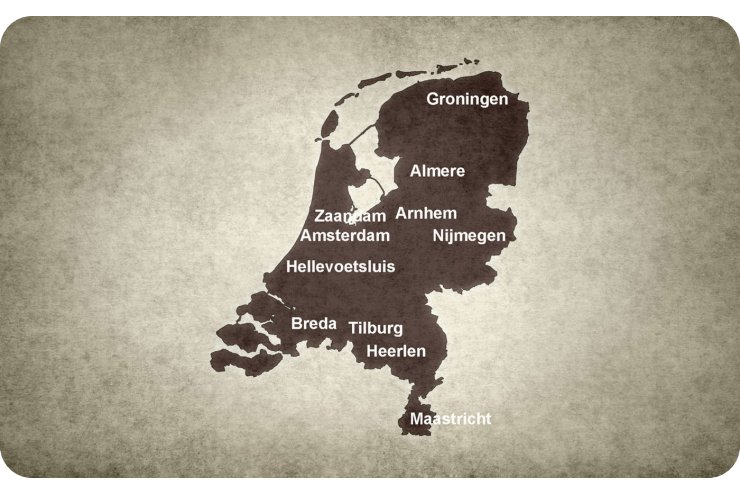
- The startup phase takes place in two coffeeshop municipalities: Breda and Tilburg. This means that growers may only deliver products to coffeeshops in these municipalities. A limited geographical scale is necessary for the required supervision. Breda and Tilburg were chosen because the initiative for a startup phase came from the mayors of these municipalities.
- During the startup phase, the maximum commercial stock of regulated products is limited to 500 grams. In addition to the 500 grams of tolerated products permitted under the tolerance policy, coffeeshops may have 500 grams of regulated products in stock during the startup phase. This will be laid down in local regulations. From the transition phase onwards, coffeeshops may have a weekly stock of regulated cannabis and hashish as commercial stock, unless the mayor decides otherwise based on Article 12b of the Decree on the closed coffeeshop supply chain experiment.
- The startup phase only starts when at least three growers are ready to deliver products to coffeeshops and the transition phase is expected to start no later than six months later. By starting with at least three growers, coffeeshop owners have a choice from the supply of different growers. There is no maximum number of growers during the startup phase: as soon as a grower is ready to deliver, they can still join. The aim is for the startup phase to last a maximum of six months. At the moment the startup phase begins, there must be an expectation that the transition phase can start no later than six months later. The ministers will include the growers' most recent planning in their decision on the starting moment of the startup phase. This limits the chance of the startup phase lasting longer than six months as much as possible.
- Developments will be monitored during the startup phase and stopped prematurely if necessary. Because municipalities have the best view of how potential risks manifest, periodic consultations take place between mayors, the Openbaar Ministerie, and the police (within the local triangle) regarding the state of affairs and any incidents. If the startup phase results in public order or safety being seriously compromised, it may be decided in consultation with the mayors to stop the startup phase. This decision will then be effected by the mayors by setting the permitted commercial stock for regulated products from 500 grams to 0 grams.
Potential participation of Amsterdam
In the coalition agreement, it was agreed that the experiment would be expanded to include a major city. In previous letters to Parliament, the Ministry of J&V reported that mayors of municipalities with more than 100,000 inhabitants were asked to express interest in participation.
Amsterdam has since indicated the conditions they set for participation in the experiment. Among other things, the municipality sets the condition that the experiment does not lead to an increase in street trade and that the supply of participating coffeeshops remains at the same level as before. Additionally, Amsterdam wants prior clarity on the financing and implementation of the experiment.
Amsterdam is a major player in the Dutch coffeeshop market. The addition of a large city makes a significant contribution to the fulfillment of the experiment. With established criteria of 100,000 inhabitants and the presence of at least 10 coffeeshops, three districts qualify for participation: Zuid, Oost, and West. The municipality has not yet made a decision on the choice of district. This is expected by mid-June.
Designation of 10th grower
The designation of the tenth grower is an important step in the progress of the experiment. With this, the expected cultivation capacity of regulated cannabis and hashish is sufficient to be able to start the experiment. The growers will produce regulated cannabis and hashish for the participating coffeeshops during the startup phase and experimental phase. The growers are located in different regions of the Netherlands.
It is expected that more information will become available in the short term regarding the choice of the district in Amsterdam and the start of the startup phase in Breda and Tilburg. The BCD is closely following developments and will publish about them regularly in the coming months.