
This is an English translation. The original Dutch article is authoritative.
Drug expert August de Loor warns in an open letter to Het Parool against the enforcement of the I-criterion, the exclusion of tourists from coffeeshops, in Amsterdam. This week, Amsterdam City Hall is deliberating on the introduction of the I-criterion as a weapon in the fight against so-called low-value drug tourism. Here is an attempt to prevent that introduction via an Open Letter for the daily newspaper Het Parool.
_“Oh no, there are those weed-tourists again, coming like a plague of locusts solely for the coffeeshops and leaving behind mountains of litter and the smell of urine.”_
_“Mayor, away with those drug tourists, because they only see Amsterdam as a drug paradise and squander the Amsterdam World Heritage!”_
_“If we only allow Dutch citizens into coffeeshops, we will immediately be rid of that undesirable low-value part of mass tourism!”_
These and other quotes describe an image of how visitors to coffeeshops are perceived. These are not just residents but also historians, scientists, politicians, administrators, journalists, and other key figures in Amsterdam who express themselves in this way, and the call is increasing for Amsterdam to follow several cities in the south of the country by introducing the I-criterion.
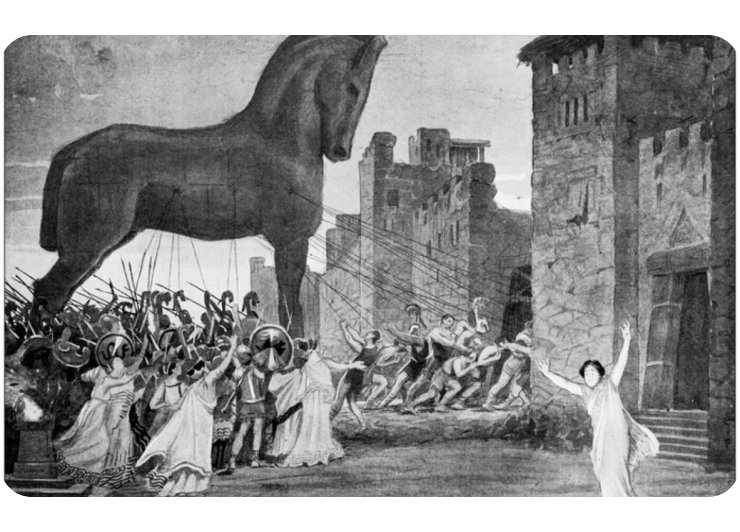
The question that must be asked here is whether it is true that coffeeshops attract low-value tourism. And whether the introduction of the I-criterion will stop this. Or whether not only Amsterdam but also the rest of the Netherlands is bringing in a Trojan Horse?
Low-value tourism?
As a 71-year-old resident of the city centre and a 51-year Amsterdam street corner worker in the world of drugs, I have for decades seen coffeeshops, just like cafés, filled with domestic and foreign visitors. During Gay Pride, the European Cup football, pop concerts, King’s Day, trade fairs at the RAI, ADE music festival, and on top of that all those temporary foreign workers from the transshipment companies, IT, and the financial sector. Not to mention all those foreign students. Urban tourism has been added to this over the past decade. With the crowds placing an extra burden on the public domain of the city centre (whereby the nuisance from coffeeshops is not comparable to that from the nightlife circuit).
Reviewing all this, the assumption that coffeeshops attract low-value tourism is unjustified. It is questionable whether all those who claim this have ever visited a coffeeshop.
Despite the rise of urban tourism, the flow of visitors to coffeeshops can still be divided between those officially registered in the Netherlands, those registered for a short time, and those not registered at all. Combined with the many relational cross-links between visitors, this stands in stark contrast to the assumption among proponents of the I-criterion that there is a strict separation in coffeeshops between registered and non-registered visitors. It should be clear that any measure introduced on a false assumption does not work. This certainly applies to the I-criterion.
Starting at the front door with heated discussions about who is and who is not allowed inside. The BIZARRE situation that tourists stay in a hospitable city with many public venues, but where ONE public space, the coffeeshop, is forbidden territory for them. Where they must watch passively as that same coffeeshop is pleasantly full of people who are apparently allowed in! And as for all those coffeeshops that now focus purely on sales, in practice having a counter right behind the front door with “want-to-be-helped-quickly-in-and-out-walking-customers”!
How can enforcement take place efficiently within such a setting anyway? It should be noted that the staff must meanwhile watch passively as the customer helped a minute earlier “resells” their cannabis with a 5 euro surcharge to the tourist waiting outside. How is the coffeeshop owner supposed to explain this to the neighbours? And how on earth are the enforcers supposed to react to this if the neighbours start complaining? And what will the criterion cause in coffeeshops in residential areas? Far-reaching irritation for owners and staff for implementing all kinds of control measures while hardly any tourists visit their shop. And what to do with all those short/long-term temporary residents in Amsterdam without valid papers who consider the coffeeshop their local pub but are suddenly no longer allowed in? (the international city of Amsterdam has “many shades of grey” between registered and non-registered residents). And finally, how many psychologists are needed to keep the motivation high among all those enforcers who will experience in practice how nonsensical the I-criterion is to monitor, or how it will prove counterproductive!
Side effects
However, the criterion will cause much more! History teaches us that when measures are introduced based on false assumptions, creativity among those directly involved flourishes to circumvent those measures. As an outgrowth of 50 years of wavering soft drug policy, creativity and resourcefulness in the world of cannabis have been raised to an art form in dealing with that wavering policy. Regarding the I-criterion, a counter-movement will emerge offering false registration forms, from “informally” supplying cannabis to foreign friends to welcome packages in AirBnB rooms. Or apps and phone lines on how you as a tourist in Amsterdam can obtain cannabis (which will obviously – and unfortunately – not be limited to cannabis).
Increasing nuisance
But it will not be limited to that! The I-criterion will lead to street dealers within sight of the coffeeshop front door, to brazen dealers offering their services in hotel lobbies and even outside the Ring road. Because of the criterion, smoking will move to hotel rooms, to cafés, in parks, etc., with more nuisance for the city and the use becoming more visible to youths under 18 (thus undermining the youth cannabis prevention policy).
Chutzpah
The consequence of introducing the I-criterion to exclude so-called low-value tourists in the Amsterdam city centre will mean that all coffeeshops outside the centre will also have to endure it, with the rest of the Netherlands following due to fear of the waterbed effect among local authorities. This means that where the disadvantages of the I-criterion in many cities in the south of the country have been “masked” for years by neighbouring cities that opted out (or reversed the decision), that will no longer apply. It is a Chutzpah that proponents of the I-criterion, including even Professor Tops, claim that the introduction of the I-criterion in cities such as Maastricht has turned out successfully. But even more important is that the visitor patterns to coffeeshops in Maastricht and other border towns are in many ways not comparable to those of Amsterdam coffeeshops. In short, the border towns have their own arguments against the criterion, Amsterdam has its own!
Playing with fire
With a 100% national introduction of the I-criterion, all the disadvantages will surface along with a circuit that profits from it: the illegal sales circuit outside the coffeeshops. A circuit that is not limited to cannabis but sells all kinds of soft and hard drugs (increasingly including the sale of steroids, illegal Viagra, and obscure designer drugs). And all this without any restriction on age, quality assurance, product information, and education. In short, with the I-criterion, Amsterdam is not only bringing in a Trojan Horse for itself but also into cities that did not ask for it!
Amsterdam, think before you act!
With the future of Amsterdam now highly uncertain for the coming years due to the Corona crisis, it is absolutely “playing with fire” if City Hall takes all sorts of measures that cannot be reversed. And this brings me to one of my most concerned analyses if the I-criterion is introduced. It is because of that same Corona crisis that we are on the eve of a massive new wave of unemployment. With the poverty trap looming, it is predictable that a desperate part of them will tap into both their private dealing addresses and their contacts in the Amsterdam nightlife circuit to resell to all those who are not allowed into the coffeeshops. This will undoubtedly lead to tensions with the current “hardened” cadres of street dealers. Tensions that will largely be fought out on the streets in both the centre and the periphery of the city. With, of course, the greatest chance that those hardened cadres will emerge as the winners of the struggle. Naturally, this will ultimately produce only losers. That is the very last thing Amsterdam is waiting for!
August de Loor, Amsterdam 19 August 2020