
This is an English translation. The original Dutch article is authoritative.
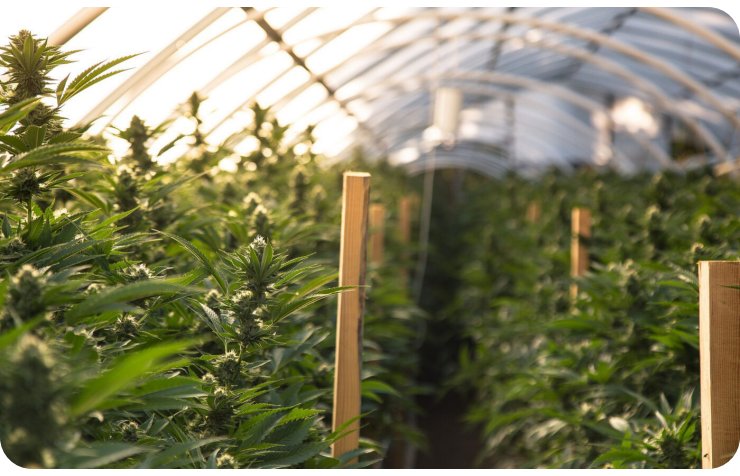
The experimentation phase of the _closed coffeeshop supply chain experiment_ (cannabis experiment) will start on 7 April 2025. From this date, coffeeshops in the ten participating municipalities will only be permitted to sell regulated cannabis products. This decision was made based on evaluations of production capacity, the diversity and quality of the regulated products, as well as input from coffeeshop owners and municipalities.
The experiment focuses on a central research question: What are the effects of a closed cannabis supply chain on public health, crime, and safety? The goal is to investigate whether regulated cultivation and sales can replace the illegal market, what social effects this entails, and whether the new market offers advantages compared to the current tolerance policy.
Although the outcomes of the experiment will provide valuable insights, it is important to emphasise that these may contribute to decision-making regarding future cannabis policy, but do not constitute a guarantee for the national implementation of a regulated supply chain.
Start of the closed coffeeshop supply chain experiment
The start date was established after monitoring the progress of growers and the quality and diversity of the supply. Based on this, it was concluded that by April 2025, sufficient regulated products will be available to fully launch the experimentation phase. This decision has been coordinated with municipalities and approved by the responsible ministers.
During the experimentation phase, coffeeshops in the participating municipalities may only sell regulated products. This offers growers, coffeeshop owners, and municipalities the opportunity to work together within a fully regulated supply chain. For consumers, this means that in the participating municipalities, they will exclusively have access to products that have been controlled and produced within the experiment.
The evaluation of the preparation phase, as recorded in the report _“Op weg naar een nieuwe cannabismarkt”_ (Towards a new cannabis market), has yielded important lessons. A number of points, such as more efficient cooperation between involved parties, will be addressed in the coming phases. The evaluation of the preparation phase of the _closed coffeeshop supply chain experiment_ shows that important lessons have been learned that directly influence the upcoming experimentation phase. One of the most important points is that developing the legal framework and the accompanying regulations required more time and complexity than expected.
Although the experimentation phase now appears well-prepared, there are still factors that could cause delays. One of the greatest risks is that five of the selected growers are not yet operational and must start production by May 2025 at the latest. In addition, challenges surrounding supervision and enforcement remains a point of attention. The report points out that responsibilities in this area are not yet fully clear, which can cause inefficiencies. The coordination between growers, coffeeshops, municipalities, and the ministry may also remain a bottleneck, especially if the consultation structures are not organised more efficiently than in the preparation phase. Furthermore, unexpected obstacles such as legal problems, logistical challenges, or political changes may influence progress. Although 7 April 2025 serves as a hard deadline, alertness and flexibility remain necessary to absorb possible delays and ensure the experimentation phase proceeds successfully.
Attention to the grower selection procedure
The delays in the selection and operationalisation of the growers led to a limited and unstable supply during the preparation phase. For the experimentation phase, it is expected that the production capacity of growers will better align with demand, partly due to the addition of new growers in April 2025. This will improve not only availability but also product diversity.
In addition, it is indicated that the five growers who have not yet started production have been placed under a nine-month commissioning obligation. This means they must be operational by May 2025 at the latest; otherwise, their designation may be withdrawn. If they do not meet this deadline, new growers from the waiting list must be approached, which requires extra time and coordination. This measure is intended to ensure that the experiment has sufficient regulated production capacity at the start of the experimentation phase.
Recommendations for during the experimentation phase
The evaluation in the report contains various recommendations to better organise the experimentation phase and prevent further delays. The most important points follow below:
- More efficient selection and cooperation: The report emphasises that improved cooperation between national and local governments is essential. Local cultivation municipalities, for example, have a need for clearer frameworks and more support from the national government. Showing partnership and understanding the local context is seen as crucial.
- Stricter selection procedures: During the preparation phase, the selection criteria for growers were insufficiently strict. This led to bottlenecks, such as problems with suitable cultivation locations and banking relationships. The report advises that for future selections, for example, only growers who already possess a suitable location or a bank account should be admitted to avoid these obstacles.
- Improved communication and transparency: The lack of timely and transparent communication with stakeholders led to a loss of trust during the preparation phase. The report recommends focusing communication more at the local level and facilitating regular information exchange between ministries and involved parties within the experimental municipalities.
- Strengthening supervision and enforcement: Monitoring the closed nature of the cannabis supply chain remains a point of attention. The report underlines the importance of a uniform supervision protocol and better coordination between supervisors such as the NVWA, IJenV, and local authorities. Without effective control, the integrity of the supply chain may be compromised.
Although progress has been made, the experiment remains a challenge with uncertainties. The results of this phase will ultimately contribute to the evaluation of a regulated cannabis supply chain.
The ‘closed coffeeshop supply chain experiment’ aims to investigate whether a regulated chain of production, distribution, and sale of cannabis is possible. The outcomes of this research may contribute to decision-making regarding future cannabis policy in the Netherlands.
Source list:
- Research Report
- Memo start criteria experimentation phase
- National Government News Item
- Evaluation reports
- Appendices to Parliamentary Letters
* _Op weg naar een nieuwe cannabismarkt: Een evaluatie van de voorbereidingsfase van het Experiment gesloten coffeeshopketen_. Bureau Boekhoorn, Hogeschool van Amsterdam, Rijksuniversiteit Groningen, published by the WODC.
* Internal document describing the criteria for starting the experimentation phase.
* “Experimenteerfase van het Experiment gesloten coffeeshopketen (wietexperiment) start in april.” Published on 10 December 2024.
* Summary process evaluation Wietexperiment (Dutch version).
* Parliamentary letter regarding the start of the experimentation phase and presentation of the process evaluation research report (10 December 2024).
Editors BCD, 11 December 2024