
This is an English translation. The original Dutch article is authoritative.
Making decisions under immense pressure in the fight against the Coronavirus is a hell of a job. Decisions made can turn out to be counterproductive. As was evident this week with the closure of coffeeshops, which in one fell swoop undermined one of the most important pillars of Dutch drug policy; the separation of the sale of soft drugs from that of hard drugs.
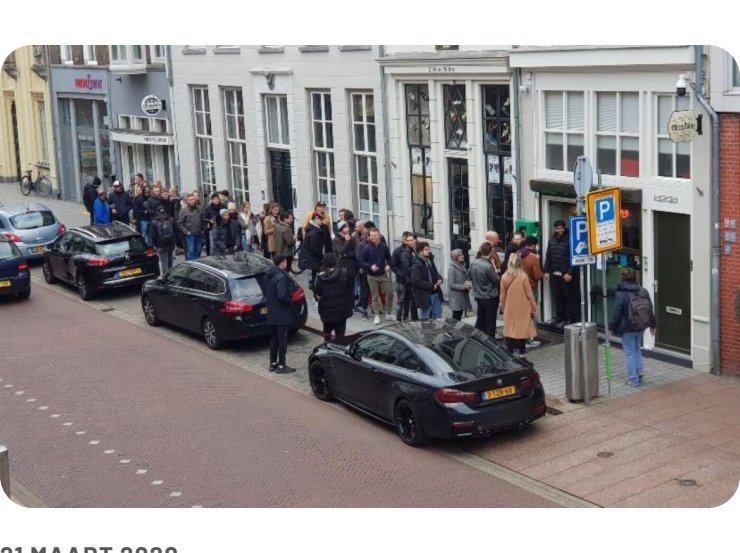
Amsterdam 20 March 2020 – Even before the first coffeeshop closed its doors, street dealers and many DARK websites took over the market. Everything was for sale. From cannabis, heroin, and designer drugs to ready-made packages of GHB. It testifies to political courage that the government reversed its decision within twenty-four hours so that coffeeshops, far away from hard drugs, could once again sell cannabis under safe and controllable conditions.
My appeal is that this political courage serves as a reason to finally push through in realising a truly sustainable Dutch coffeeshop policy. This means stopping the erratic establishment policy that has persisted for years, involving hundreds of cities without a single coffeeshop. Such as Amstelveen, where cannabis enthusiasts must travel to Amsterdam, resulting in a disproportionate influx that has forced Amsterdam to close many coffeeshops over the past 10 years.
And if we look back even further, the coffeeshop sector has shrunk by more than 70% since the early nineties. Meanwhile, due to the socialisation of cannabis use across age, social class, and ethnicity, a balanced distribution of small-scale coffeeshops across the country is desirable. (Comparable to the network of diverse types of cafés in cities and villages for managing the use of alcohol in an orderly fashion).
And finally, there must be a push to immediately and effectively legalise cannabis. The experiment currently chosen is progressing far too slowly for that purpose. Only in 6 to 7 years can the political translation of the results be made, while in the meantime, worldwide—even in the country where the War On Drugs was invented—legalisation is increasingly becoming a reality.
Changes are also taking place at the level of supply and demand for cannabis that even the current tolerance policy for coffeeshops has no answer for. Let alone within the current design of the experiment.
In short, dear government; show courage in overturning the current half-hearted policy! In our modern society, coffeeshops are the café/off-licences, but for the most popular stimulant after alcohol; Cannabis!
Where difficult policy has had to be developed for decades to push the widespread sale of alcohol back into specialist shops, this has already been the case for cannabis for 50 years with coffeeshops!
August de Loor, drugs expert